The lash curl chart, from flat to flicked.
Updated 15 October 2026
Curl decides how much lift a lash gives and how open the eye looks. Get it right and a set comes alive, get it wrong and the prettiest length falls flat. Here is the whole chart in one table, every curl drawn in profile, and the eye each one was made for.
The lash curl chart runs from flat to flicked: J and B read natural, C is the everyday workhorse, CC adds lift without drama, D and DD curl up and back for a wide awake look, and L, L+ and M have a straight base with a sharp kick that lifts hooded and downturned eyes. Pick the curl for the lift the eye needs, then pick the length.
Length gets all the attention, but curl is what makes a set lift. The same 11 mm lash in a soft B curl and a dramatic D curl gives two completely different looks, one quiet and natural, one wide awake and bold. Curls are named with letters, and the letter tells you how far the lash bends away from the lid, from almost straight up to a near vertical flick.
I have taught this to a lot of beginners and the thing that finally makes it click is seeing the profiles next to each other. So that is how this guide is laid out: the chart first, the profiles drawn out underneath, then the lash curl types one by one with what each is actually for. Read the chart from the top and you are moving from the gentlest lift to the strongest.
Compare a C and a CC in a tap.
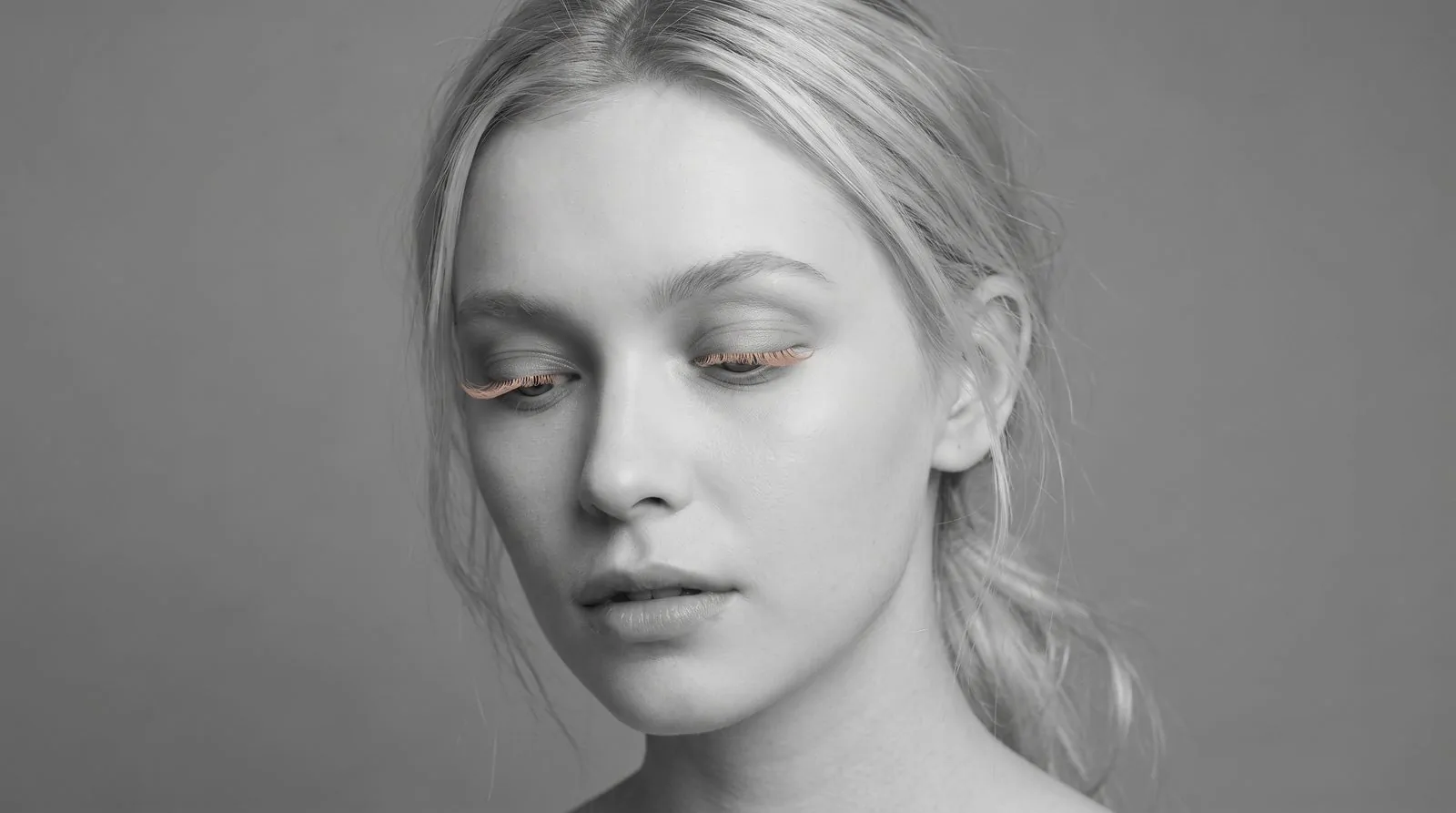
A curl reads differently on every eye, and no chart can tell you how much lift a particular lid needs. Preview the set on a real photo and switch curls instantly to see which one opens the eye in front of you, before you ever pick up tweezers. Six curls in the app, free to try.
Download free on the App Store Scan to install on your iPhone or iPad
The lash curl chart
This is the table I would pin above a bed if I were training someone. The lift column is roughly how far the tip travels away from the lid, which is the number that decides whether a lash shows on an open eye. The last two columns are the ones beginners skip and then wonder why retention is poor.
| Curl | Lift | The look | Who it suits | Natural lash it needs | Note |
|---|---|---|---|---|---|
| J | about 25 degrees | Soft, barely there | A first set, a lower lash line, men's sets | Lashes that already point up | On a lash that points down a J just points at the floor with it. |
| B | about 35 degrees | Natural with a lift | Clients who do not want to look like they are wearing lashes | Lashes with a little bend of their own | Underrated. It is the curl I give a nervous first timer. |
| C | about 55 degrees | Open, polished | Almost every eye, almond especially | Any healthy lash, straight or curled | The workhorse. If you only stock one curl, stock this one. |
| CC | about 70 degrees | Lifted, still wearable | Round and almond eyes, a light hood | Lashes with some strength at the base | What I reach for when a C looks a touch flat on the eye. |
| D | about 80 degrees | Bold, wide awake | Upturned, almond and deep set eyes | Strong, fairly straight lashes | On a heavy hood the tip can tuck back under the fold. Check it with the eye open. |
| DD | about 90 degrees | Dramatic, doll like | Photo sets and clients who want to be seen | Thick, healthy lashes only | The base barely meets a straight lash, so bonding is fussier and retention drops. |
| L | flat base, then about 75 degrees | Lift from a straight start | Hooded and downturned eyes, glasses wearers | Straight or downward lashes | The flat base bonds along the lash, which is why it holds on a lash that points down. |
| L+ | flat base, then about 85 degrees | A sharper kick | Heavier hoods and monolids | Straight lashes with decent strength | Same base as an L with more flick. Try it where an L still disappears. |
| M | flat base, then about 95 degrees | Near vertical flick | The heaviest hoods and the most downward lashes | A healthy, straight lash | The strongest lift on the chart and the easiest to overdo. Two zones, not the whole eye. |
Degrees are approximate and vary a little between brands. Treat the order as the fixed part and the numbers as a guide.
The curl profiles, side by side
Here is the same chart drawn out. Every lash starts on the same lash line, so what changes between them is purely the bend. Notice how J through DD curve from the base up, while L, L+ and M stay straight for a few millimeters and then kick. That straight section is the whole reason the L family works under a lid.
Lash curl types, one by one
These six are the curls in Lash Create, which covers the range most of us actually apply day to day.
Almost no curl. A lash lift look that adds length and darkness while staying very natural.
A soft bend at the tip. The most natural true curl, lovely for a subtle, classic finish.
A touch more lift than a J, still understated. A go to for a natural set with a little more open.
The everyday favorite. A clean open lift that flatters most eyes and reads as polished and pretty.
Bold and lifted, the tip curls up and back. Great for drama and for making short lashes look longer.
Straight at the base then a sharp kick up. Lifts hooded and downturned eyes and suits glasses wearers.
Lash Create includes all six of these, from the natural I and J through to the lifted D and L, so you can put a curl on a real photo and see what it does.
The labels brands argue about
Curl letters are not a standard, they are a convention, and every supplier bends it slightly. A few you will run into:
- CC sits between a C and a D. Some brands write it C+, and a handful call it C2. Same lash either way.
- DD is the next step past a D. You will also see it sold as D+ or, on a few charts, as a U curl, because the lash comes round far enough to read like the letter U. If a brand lists a U curl, expect it to behave like a DD or stronger.
- L+ and M are both the L shape with more kick. There is no agreed line between them, so compare the photos on the box rather than trusting the letter.
- I is barely a curl at all, a straight lash for a lash lift look or a lower lash line. Some brands skip it entirely.
The practical answer is to buy two curls from the same brand before you commit to a tray of ten. The letter tells you roughly where you are on the chart. Only the lash in your hand tells you exactly.
Which curl suits which eye
There is no single best curl, only the right curl for the eye and the look. A few reliable rules:
- Straight and downward lashes need a stronger curl, a CC or D, or an L if they point down hard, so the lash lifts rather than following the natural line.
- Hooded eyes love the L family, because the straight base lifts up and out from under a lid instead of hiding beneath it. There is more on this in our guide to lash mapping for hooded eyes, including when a CC is enough and when you need an M.
- Downturned eyes lift with a D or L curl, especially toward the outer corner where you want to fight the droop.
- Already curled natural lashes often sit best in a softer J or B, so the extension follows the lash rather than fighting it. Put a DD on a lash that already curls and the two argue all day.
- Glasses wearers suit an L curl, which lifts up and away so the lashes do not brush the lens.
Curl, length and map work together
Curl is one of three decisions, alongside length and placement. A map tells you where the length goes, the curl tells you how it lifts, and mixing a couple of curls across a set adds real dimension. To see how it all fits together, read our step by step lash mapping guide, browse the shapes in lash mapping styles, and learn the numbers in our lash mapping chart. If you are choosing a curl for a particular eye, our guide to the best lash style for your eye shape goes deeper.
Try curls before you commit
Reading a lash curl chart helps, but seeing a C next to a D on your own eyes settles it instantly. Lash Create lets you switch curls on a photo of the real eyes in a tap, so you can compare a soft B against a lifted L before a single lash goes on. Open the free eyelash try on, add your own photo, and watch which curl actually opens the eye in front of you. That is the fastest way I know to stop guessing.
Pick length for the shape and curl for the lift. The two together are what make a set look designed rather than simply applied.
Frequently asked questions
What are the different lash curl types?
The full lash curl chart runs J, B, C, CC, D, DD, L, L+ and M, with an almost straight I curl at the very start. J and B read natural, C and CC give an open everyday lift, D and DD curl up and back for drama, and the L family keeps a straight base with a sharp kick for hooded and downturned eyes. Lash Create carries six of them, I, J, B, C, D and L.
What is a DD curl?
A DD curl is the step past a D, bending about 90 degrees so the tip comes almost straight up. It gives a dramatic, doll like look and makes a short lash read much longer. It needs a thick, healthy natural lash, because the flatter base meets the lash over a smaller area, so bonding is fussier and retention is usually shorter than a C. Some brands sell the same curl as D+ or a U curl.
What is the difference between C and CC curl?
A CC curl is the same shape as a C with more lift, roughly 70 degrees against 55. On the eye that shows up as a slightly higher, more open look while still reading wearable, which is why I reach for a CC when a C looks a touch flat on a client. The two blend well in the same set, so you can run a C through the inner zones and a CC where you want more height.
What is the most popular lash curl?
The C curl is the most popular and versatile. It gives a clear, open lift that suits most eyes and reads as a polished everyday look. The D and L curls are the next step up when a client wants more drama or lift.
Which curl is best for hooded eyes?
A CC for a light hood and an L, L+ or M for a heavy one. The L family has a flat base that bonds along a straight natural lash and then kicks upward in front of the fold, so the tip shows on an open eye. Be careful with a D or DD, because on a heavy lid the tip can curl back under the fold and read shorter than a C. Our guide to lash mapping for hooded eyes walks through choosing the curl before the length.
What is the difference between a C curl and a D curl?
A C curl is a clean, classic open curve that gives natural lift. A D curl is more dramatic, with the tip curling further up and back for a bolder, more wide awake look. A D curl can also make short natural lashes look longer.
What is an L curl used for?
An L curl has a straight base and a sharp lift at the tip. That shape was made for hooded and downturned eyes and for anyone who wears glasses, because it lifts up and away rather than forward. An L+ or an M is the same idea with a stronger kick, for a lid that sits very low.
How do I choose the right lash curl?
Match the curl to how open the eye is and how much lift it needs, then pick the length. Straighter curls like I, J and B read natural, C and CC are the everyday workhorses, D and DD give drama, and L, L+ and M lift a lid that covers the lash line. Mixing two curls across a map adds dimension, and previewing them on a photo of the real eyes is the quickest way to decide.
Compare curls on your own eyes.
Download Lash Create and try every curl free on a photo of the real eyes before you buy a tray.