
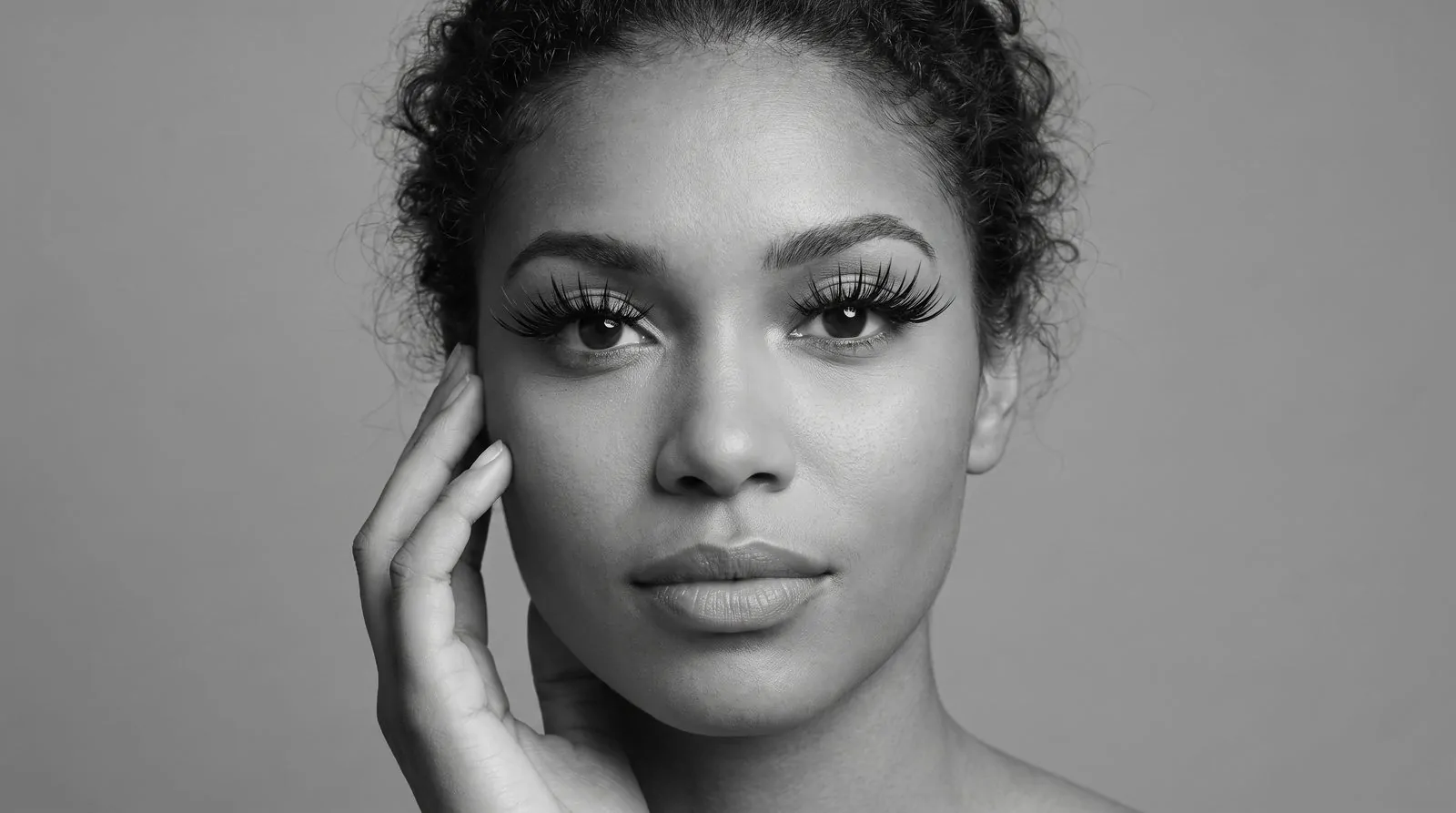
Lash mapping with clusters, segment by segment.
Updated 15 October 2026
Clusters get mapped badly more often than anything else in lashes, mostly because nobody maps them at all. They go on by eye, one side ends up heavier, and the set reads cheap when the clusters were fine.
A cluster lash map is an extension map with far fewer decisions. You split each lash line into three to five segments rather than six zones, give each a cluster length and width, usually climbing from 8 or 10 mm at the inner corner to 13 or 14 mm at the peak, then choose whether the clusters sit under the lashes or on top.
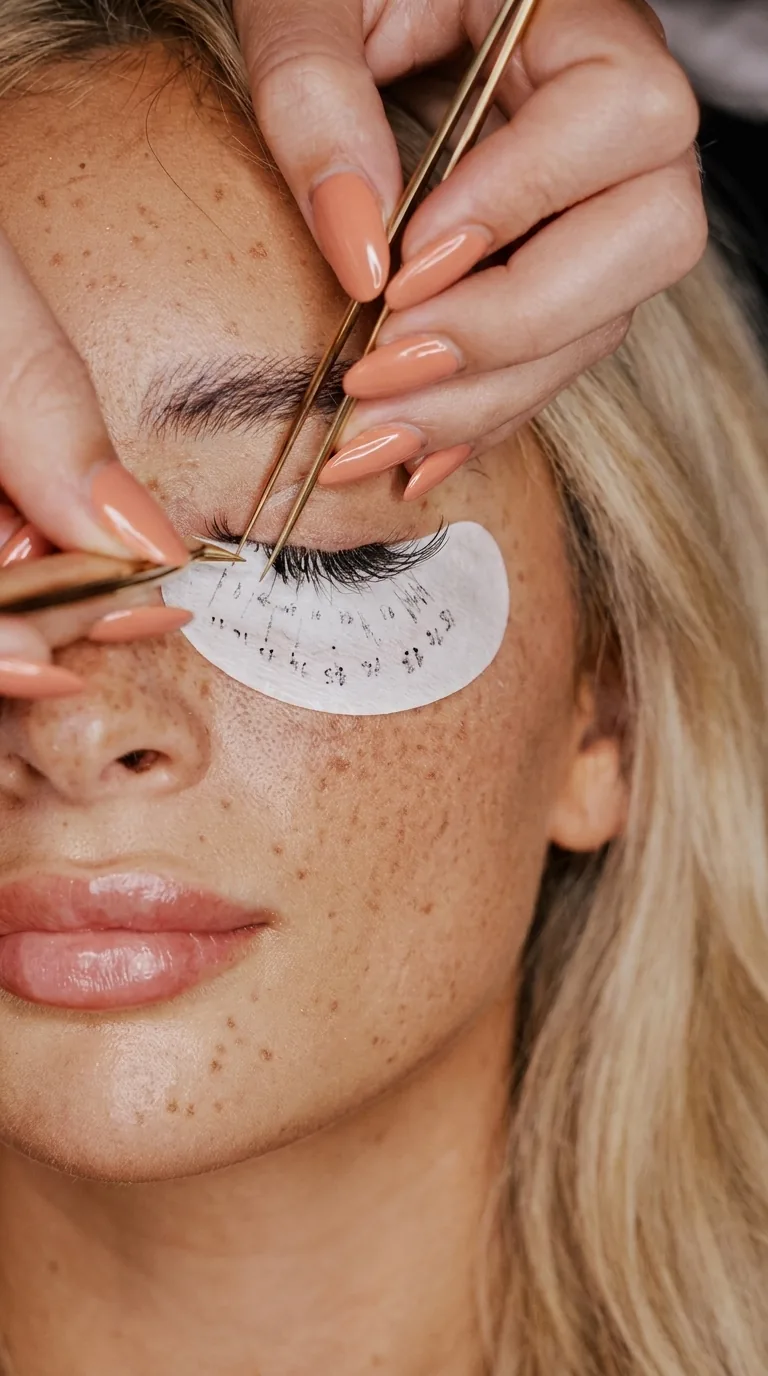
Clusters are sold as the easy option, which quietly suggests there is nothing to plan. Then five identical 14 mm clusters go on a small eye and it looks like a strip lash that lost a fight. If you've never mapped anything, read how to do lash mapping first, then come back for the cluster version.
A cluster map versus an extension map
An extension map plans one lash at a time across six or seven zones, and the gradient comes out smooth because you're placing a hundred lashes an eye. A cluster map plans in blocks. Each cluster is a pre made fan of eight to twelve lashes on one band, covering about a fifth of the lash line, and you cannot taper inside it. So you map segments rather than zones, every length jump shows, and width joins the plan. The lash mapping chart guide covers the numbers in more depth.
How many segments per eye
Count your clusters first, because the pack decides the map. Three segments is the forgiving one, inner third, centre, outer third, and it suits a small eye or a first attempt. Four is my default. Five is for a wide eye or a wispy look that needs the extra slot. More than five and you're doing a slow extension set with the wrong tool.
Length progressions that work
Clusters are usually sold 8 to 14 mm, and two rules carry the whole thing: start shorter than feels right, and never jump more than 2 mm between neighbours. On four segments, 9, 11, 13, 11 flatters almost everybody. On three, 10, 13, 11. On five, 8, 11, 13, 12, 10. The mistakes I see most are the longest cluster on the very outer tip of every set, which drops the corner, and one length for the whole lid, which is how you get the strip lash look people were avoiding.
Three cluster maps to copy
Lengths in millimeters, inner corner first. Scale down a millimeter for a small eye and up for a large one, but keep the shape of the climb.
Wispy
Alternation. Longer spikes with shorter clusters between them, so the edge reads textured rather than solid. It wants five segments and narrow clusters everywhere but the spikes.
| Segment | S1 | S2 | S3 | S4 | S5 |
|---|---|---|---|---|---|
| Length | 8 | 12 | 14 | 12 | 10 |
| Cluster | narrow | narrow | wide spike | narrow | narrow |
| Why | corner stays clean | first spike | peak, past the pupil | holds the height | tapers out |
Natural
The quiet one, and the map I'd hand anyone doing their own lashes for the first time. A gentle climb, a peak over the centre, a soft step down.
| Segment | S1 | S2 | S3 | S4 |
|---|---|---|---|---|
| Length | 9 | 11 | 12 | 10 |
| Cluster | narrow | wide | wide | narrow |
| Why | short inner corner | body through the lid | the peak | eases down |
Cat eye
The climb runs all the way out. Boldest of the three, and the one that needs honesty about eye shape, because a long outer corner lifts an almond eye and drops a downturned one.
| Segment | S1 | S2 | S3 | S4 |
|---|---|---|---|---|
| Length | 8 | 10 | 13 | 14 |
| Cluster | narrow | narrow | wide | wide |
| Why | inner corner short | slow climb | the lift begins | longest at the corner |
They're the same three shapes you'd use in a full set. Our visual guide to lash mapping styles draws each one out, and the cluster version is that shape with the detail turned down.
Under the lashes or on top
Under lash application bonds the band beneath your own lashes, so it disappears and the set reads much more like extensions. It holds longest and it's fiddlier. Top application lays the cluster on the lash line the way a strip does, quicker but the band shows on fine lashes. For mapping, the difference is a millimeter: an under lash cluster reads shorter than it measures, so add one to the peak, and map top application a millimeter shorter than you think.
Mapping clusters for your eye shape
Almond takes anything. Round wants the peak pushed outward with a narrow inner cluster, because length through the centre makes it rounder. Downturned eyes need the longest cluster off the outer tip, so peak at S3 of four and step down. Close set eyes want short and narrow inside, wide set the reverse. Hooded is the hard one, because length vanishes under the fold and lift matters more than millimeters, so read lash mapping for hooded eyes before you buy.
Curl applies to clusters too, even though trays rarely say which one you're buying. One that curls back too far tucks under a hood exactly like an individual lash, and a flat one points at the floor. The lash curl chart explains what each letter does.
Bond and seal, as far as the map goes
Two things about bonding change the map. Weight first: a cluster is heavier than the fans covering the same stretch, and all of it hangs off the few natural lashes the band touches, which is the real argument for mapping shorter than you want. Then the seal, which holds the band above and below, buys days of wear and fixes your lengths for the duration. There's no nudging a cluster once it's sealed, so settle the map before the glue is open.
How long a cluster set lasts
Less than the packaging implies. Top application with lash glue is an evening look, a day or two. With bond and seal it gets three to five days. Under lash with bond and seal gets five to seven. Professional extensions run four to six weeks with a fill in between, and that gap is the honest trade: clusters are cheaper per wear, extensions last and look better doing it.
When to see a lash tech instead
If you're reapplying more than twice a week, extensions now cost less and damage less. If your lashes have gone sparse, stop and let them recover. If your eyes sting, water or go red, that's the glue, and it needs a professional with a sensitive adhesive. And if you've got a heavy hood, a droopy outer corner or genuinely uneven eyes, the map is the whole job, and a good tech reads it in seconds.
See the map on your own eyes first
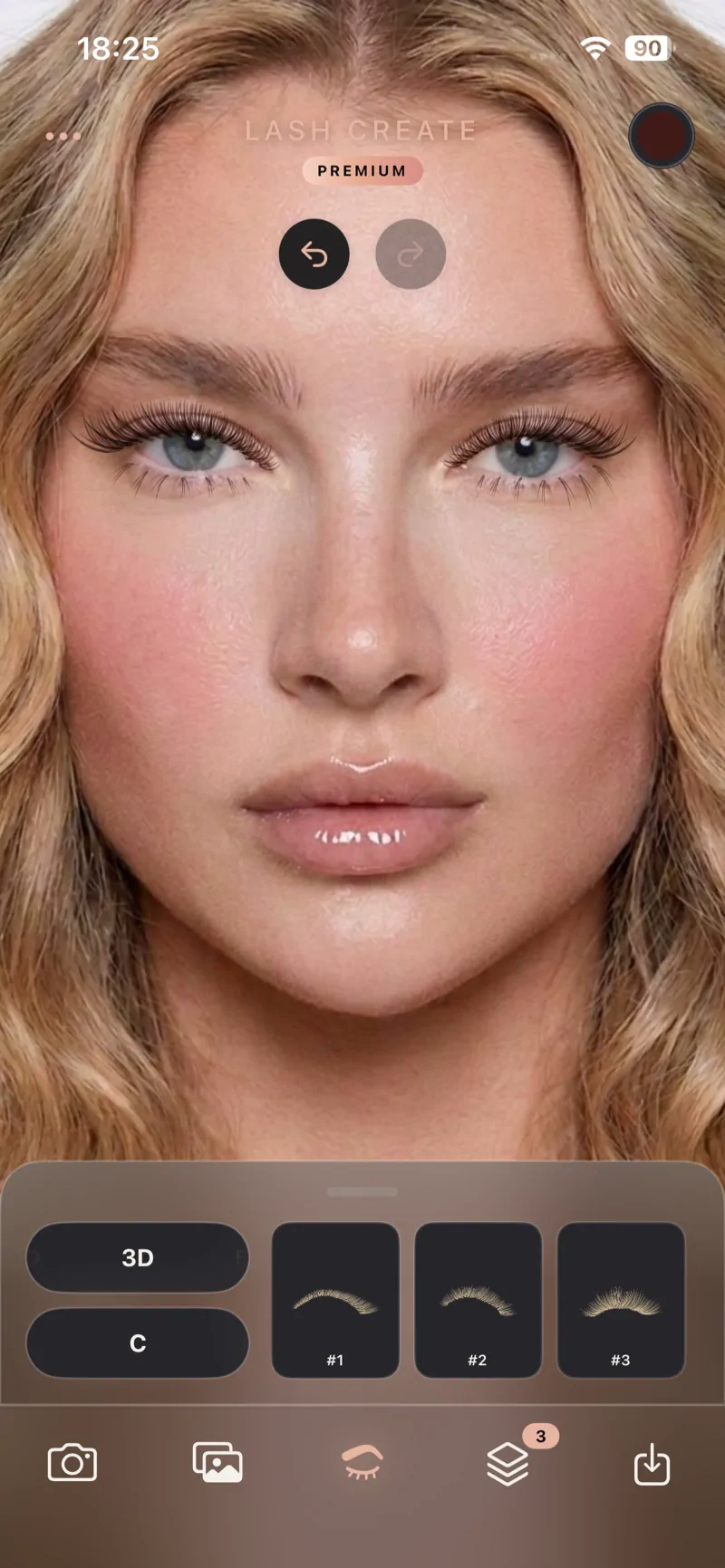
Cluster sets go wrong because nobody can picture 14 mm. You pick it because it looks dramatic in the tray, then it lands on a small eye and takes over the face. So look at the shape first. Open the eyelash try on in Lash Create, add a photo of your own eyes and drop a wispy or cat eye look onto them. Switch between them, watch what a long outer corner does next to a centre peak, then long press your chosen style and the full map appears with the lengths laid out. Free to try, and five minutes tells you which tray to buy.
Clusters don't give you much to decide. That's exactly why the few decisions have to be right, and why a map written down beats a map in your head.
Preview a wispy or cat eye on your own photo.
Add a photo of your own eyes, drop a cluster style on them and switch between a wispy, a natural and a cat eye look. Long press your chosen style and the full map appears, lengths and all. Free to try on iPhone and iPad.
Download free on the App Store Scan to install on your iPhone or iPad
Frequently asked questions
What is a cluster lash map?
A plan for where each cluster goes along the lash line. You split the eye into three to five segments, write a length and a width into each, then decide whether the clusters sit under the lashes or on top. Same idea as an extension map with far fewer entries.
How many clusters do you use per eye?
Three to five on most eyes. Three is quick and forgiving and suits a small eye or a first attempt, four is the everyday choice, and five suits a wide eye or a wispy look where you alternate lengths.
What lengths should I use for cluster lashes?
Clusters usually run 8 to 14 mm. On four segments, 9, 11, 13, 11 from the inner corner out flatters almost everybody, and on three try 10, 13, 11. Never jump more than 2 mm between neighbours, because clusters show every step.
Should cluster lashes go under or on top of your lashes?
Under lash bonds the band beneath your own lashes, which hides it, reads more like extensions and holds longer. Top application is quicker but shows the band on fine lashes. Mapping for under lash, add a millimeter to the peak.
How long do cluster lashes last?
A day or two on lash glue, three to five days with bond and seal, five to seven if they're bonded under the lashes. Professional extensions run four to six weeks with a fill in between, which is the honest trade for the extra time and cost.
Can I see a cluster look on my own eyes before buying?
Yes. In Lash Create you add a photo of your own eyes, drop a wispy, natural or cat eye style on them and switch between the looks, then long press your chosen style to reveal the full map. It's free to try, and it tells you which tray to buy.
Try a cluster look on your own eyes.
Download Lash Create and preview the set on a real photo, free, before you buy a single tray.